
BMS & Energy / B2B battery system solutions
High Voltage BMS Solutions for Battery Packs & Energy Storage
Reduce integration uncertainty before committing to volume supply. For battery pack manufacturers, energy-storage wholesalers and system integrators, a high voltage BMS solution connects battery monitoring, protection coordination and equipment communication with a documented path from requirements to sample validation and repeat orders.
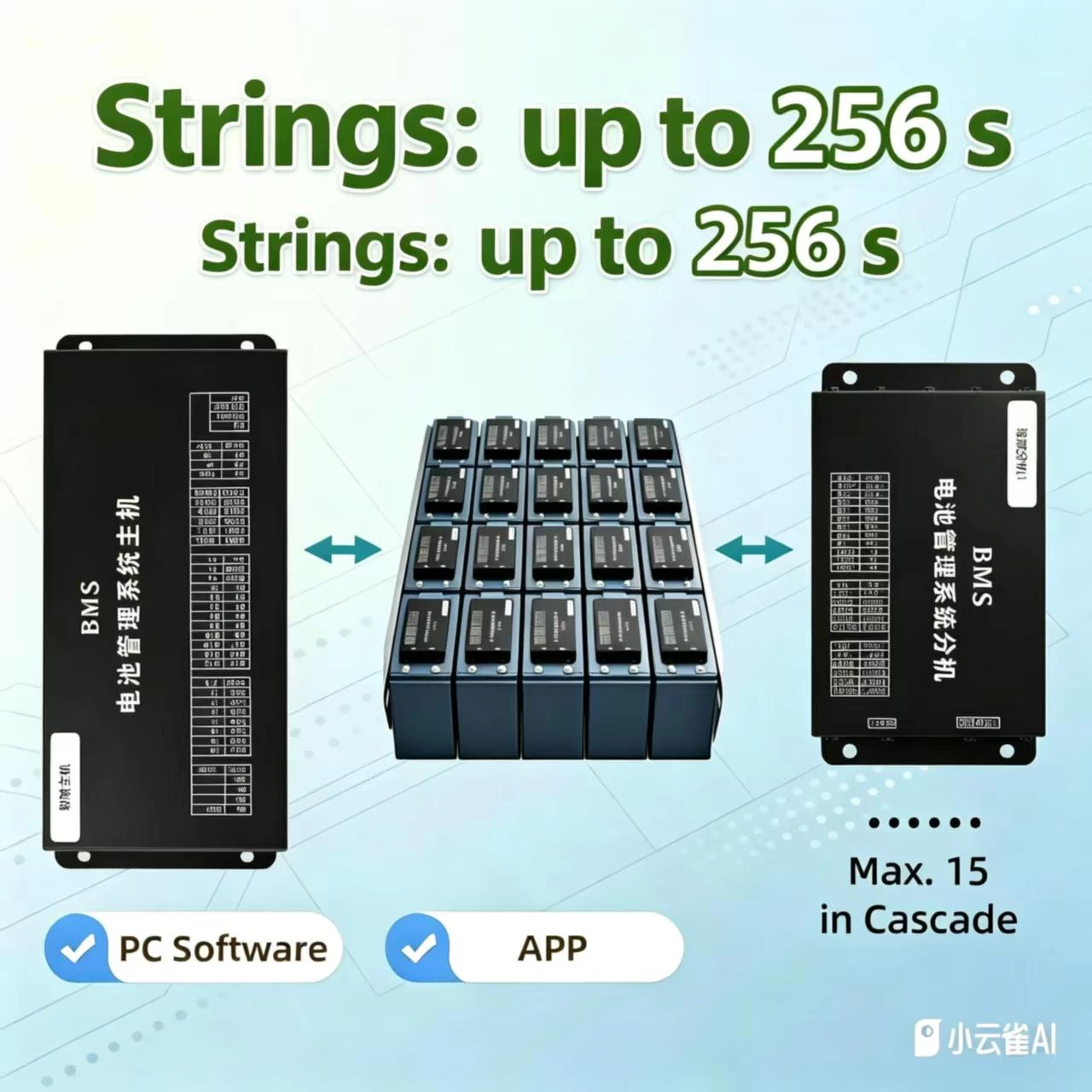
Architecture aligned with your project
Connect Module Data to System-Level Decisions
Disconnected module data makes battery integration harder to manage. A master-slave BMS architecture brings local cell measurements into a coordinated system view, helping pack manufacturers and integrators define monitoring, fault responses and equipment interfaces across a modular battery.
Use this architecture as a planning reference. Confirm power wiring, isolation, protection devices and communication interfaces against the approved project drawings.
Review physical integration before procurement
Evaluate the Complete Assembly, Not Just the Controller
Installation constraints can turn a suitable electrical design into costly rework. These supplied equipment photographs help buyers review enclosure access, module placement and internal connections. Open each original image, then verify dimensions and wiring against model-specific documentation.

Plan Control & Service Access
A consolidated master enclosure can simplify access to the display, switches and connectors. Review panel access, connector assignments and installation clearances before assembly to reduce wiring changes and make commissioning and maintenance easier to plan.
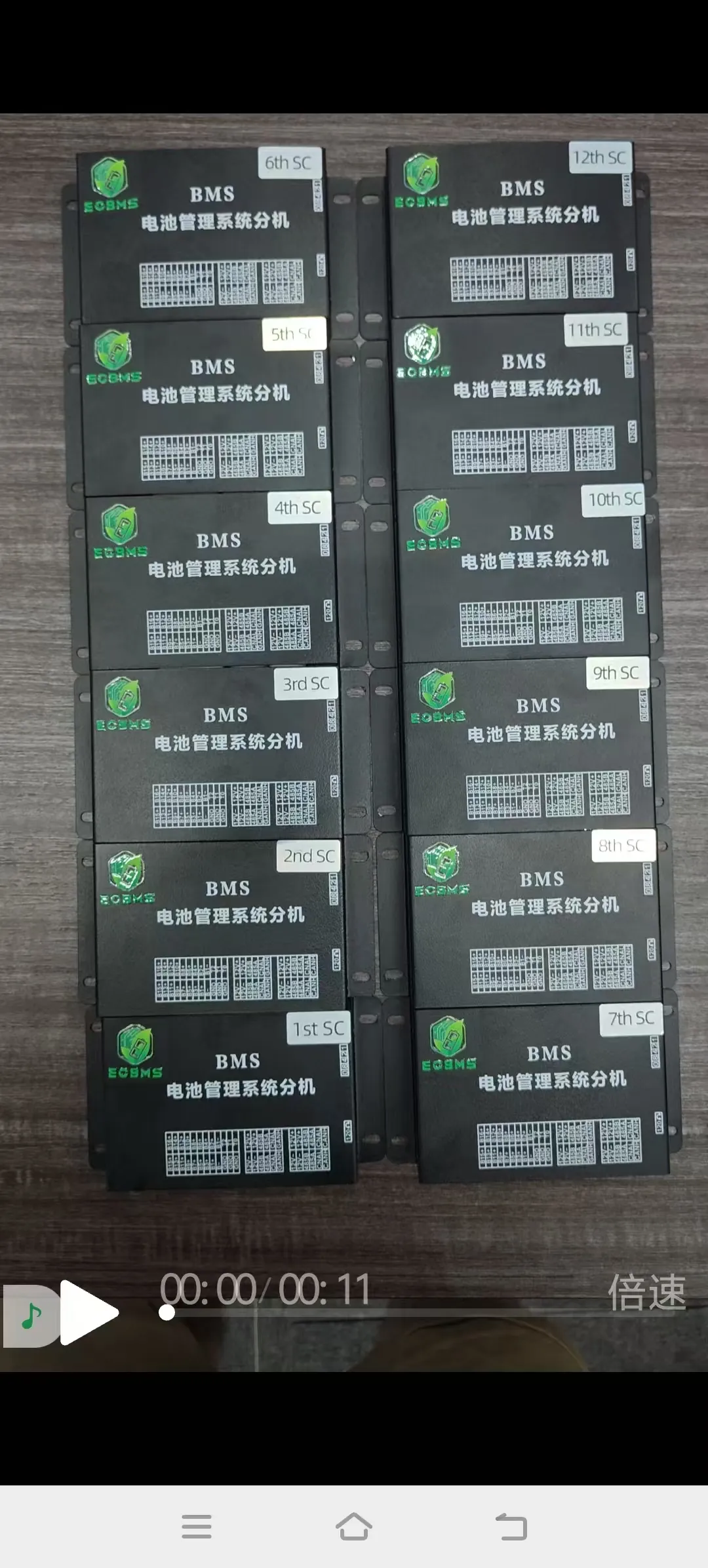
Match Monitoring to Your Modules
Distributed monitoring units support a modular approach to collecting battery data. Confirm supported cell counts, addressing and harness requirements for your pack layout. The units pictured illustrate an arrangement; they do not establish the system's expansion capacity.
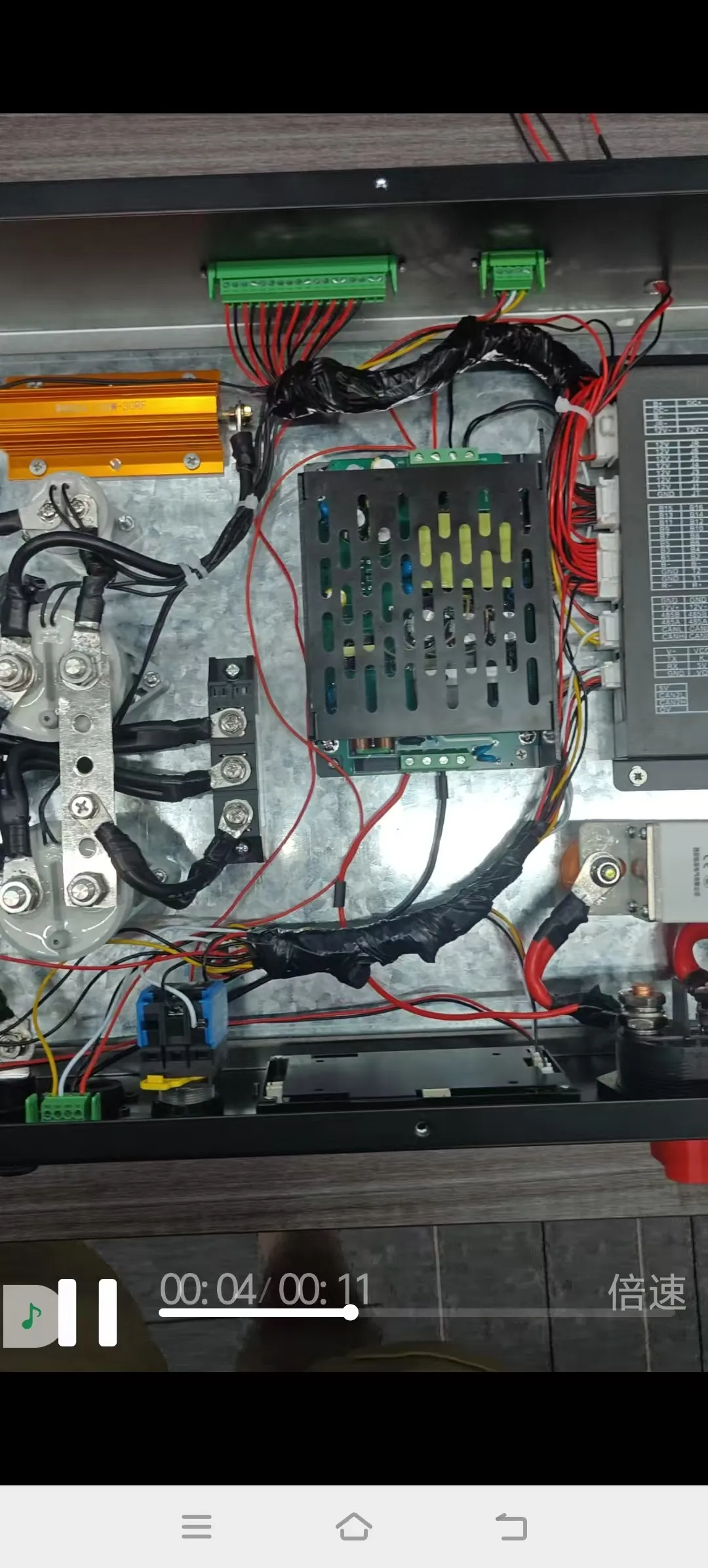
Verify Assembly & Documentation
The internal view provides context for wiring and component placement. Compare the proposed assembly with approved electrical drawings and the bill of materials so engineering and purchasing teams evaluate the same configuration before sample approval or batch ordering.
Translate system functions into business value
Address Commissioning, Fault Response & Operating Visibility
Improve Battery Issue Visibility
Cell voltage, temperature and pack current data help engineering teams investigate abnormal operation. Specify how sensor faults, missing measurements and communication loss are reported, then test those responses during sample evaluation to reduce uncertainty during commissioning and service.
Define Coordinated Fault Responses
Monitoring alone does not define a complete protection strategy. Align operating limits, contactor commands and fault responses with the battery and connected equipment. Document trip thresholds and independent protection responsibilities to make acceptance testing clearer and reduce integration ambiguity.
Plan Controlled DC Bus Connection
Where the system requires precharge, coordinate the circuit with the actual DC bus load. Review resistor sizing, timing, switching devices and startup behavior before commissioning to address inrush-related integration problems and establish a repeatable connection sequence.
Resolve Equipment Data Requirements
Inverter, PCS and energy management integration depends on usable data, not simply a communication port. Agree required measurements, alarms and charge/discharge limits, then validate protocol behavior. Confirm state-of-charge reporting and event records for the selected hardware and firmware.
These are solution evaluation criteria, not guaranteed features of the photographed assembly. Use the selected model's datasheet and sample test results to confirm scope.
Solutions shaped by operating requirements
Align High Voltage Battery Management with the Application

Energy Storage Integration & Wholesale Supply
Solar-plus-storage and commercial ESS projects bring together battery racks, PCS interfaces and operating strategies. Define these dependencies early so integrators can validate system communication and wholesalers can quote consistent configurations, documentation and accessories for each customer's project.

Industrial Battery Packs & Backup Power
Pack manufacturers and industrial integrators must address changing loads, installation limits and maintenance access. Review startup, interruption and recovery requirements alongside monitoring and protection to define a solution suited to the equipment. Review industrial battery integration needs →
The application images illustrate project contexts. They are not customer references or evidence that the pictured BMS operates at those sites.
Build a comparable, verifiable solution brief
Define Integration Risks Before Comparing Quotations
Incomplete requirements can hide compatibility gaps and missing accessories. Use this checklist to align engineering and purchasing on one project brief. Compare quotations against the same configuration, documentation and acceptance criteria rather than controller price alone.
| Project decision | Requirements and evidence to agree |
|---|---|
| Battery architecture | Document chemistry, cells per module, modules per string, parallel strings and capacity to match monitoring coverage to the pack design. |
| Operating voltage & isolation | Confirm minimum, nominal and maximum charging voltage, plus assembly insulation requirements, before approving voltage suitability. |
| Load profile & current sensing | Provide continuous charge/discharge duty, peak current and duration so sensor range and system responses can be evaluated. |
| Balancing strategy | Agree active or passive balancing, chemistry compatibility, current and activation conditions against the pack's operating needs. |
| Equipment compatibility | Identify the inverter or PCS model, CAN/RS485 protocol version, pinout and required data; establish a communication validation plan. |
| Switching & protection coordination | Define contactors, precharge, fuse coordination, auxiliary power and interlocks to clarify circuit responsibilities and fault behavior. |
| Installation & service conditions | Confirm mounting, dimensions, cooling, temperature range, enclosure protection and cable routing to reduce installation rework. |
| Supply scope & repeat orders | List master/slave quantities, harnesses, display, spares, sample needs and batch volumes so quotations cover the same deliverables. |
| Verification & acceptance evidence | Request the exact model's datasheet, drawings, hardware/firmware revisions, test criteria and applicable compliance evidence before approval. |
From project requirements to repeatable supply
A Clear Path from Technical Review to Volume Purchasing
Align the Project Brief
Share the application, battery architecture, equipment interfaces and order plan so technical requirements and purchasing priorities can be reviewed together.
Document the Solution Scope
Agree the master/slave configuration, accessories, required documents and commercial terms in writing to make supply responsibilities and quotation comparisons clear.
Validate Before Batch Approval
Test communication, fault responses and mechanical fit in the intended system. Record results against agreed acceptance criteria before committing to volume orders.
Maintain Configuration Consistency
Use approved model numbers, hardware revisions, firmware and bills of materials for repeat orders. Review proposed changes before accepting replacement configurations.
Practical answers for B2B decision-makers
High Voltage BMS Solution Questions
What does a high voltage BMS solution include?
A high voltage BMS solution combines battery monitoring, system-level protection coordination and equipment communication with an agreed integration scope. For pack manufacturers and ESS integrators, selection should cover the battery's full voltage range, module architecture, interfaces, accessories and acceptance tests—not the controller alone.
How does master-slave architecture support modular battery integration?
Slave units collect measurements near the cells, while the master evaluates module data and coordinates system interfaces. This creates a shared battery view for integration and fault review. Confirm supported module counts, addressing, isolation and communication topology against the selected hardware and firmware.
Can active balancing solve battery protection and reliability challenges?
Active balancing can reduce differences in cell charge, but it does not replace voltage, current and temperature protection or correctly rated switching hardware. Evaluate balancing alongside the complete protection strategy, and verify its current, activation conditions and performance during sample testing.
How should an integrator verify inverter or PCS compatibility?
A shared CAN or RS485 interface does not establish compatibility. Compare protocol definitions, wiring, baud rate, startup behavior, fault handling and charge/discharge limits. Validate the selected BMS and equipment together using the intended firmware and document the results before batch approval.
What should energy-storage wholesalers request before placing an order?
Provide the customer's battery architecture, voltage range, current duty, equipment interfaces, installation conditions and quantity. Request a configuration-specific quotation, bill of materials, hardware/firmware revisions, sample acceptance criteria and delivery terms. Check that compliance documents apply to the exact model and supply scope.
How can a high voltage BMS solution accommodate future expansion?
Expansion depends on the master's supported module count, communication topology, isolation design and firmware. Additional modules may also change voltage and protection requirements. Define the expansion scenario during initial planning and verify the complete revised configuration before adding modules to an operating battery system.
Turn your battery requirements into a solution brief
Plan Your High Voltage BMS Integration
Share your battery voltage range, module layout, load profile, inverter or PCS interface and planned quantity. Start a focused discussion on configuration, validation and supply scope before moving from sample evaluation to volume purchasing.
Request a Solution Review