OEM & ODM BMS Solutions for Battery Pack Manufacturers & Distributors
BMS selection, OEM / ODM requirements review and manufacturing-partner supply coordination for your battery pack.
Looking for a BMS supplier and selection consultant to coordinate OEM / ODM requirements with manufacturing partners? BMS & Energy does not operate its own factory. We support battery pack manufacturers, energy storage integrators, distributors, wholesalers and equipment manufacturers who need more than a standard protection board.
From battery specifications and PCB dimensions to communication protocols and balancing functions, we help develop a BMS around your actual application.
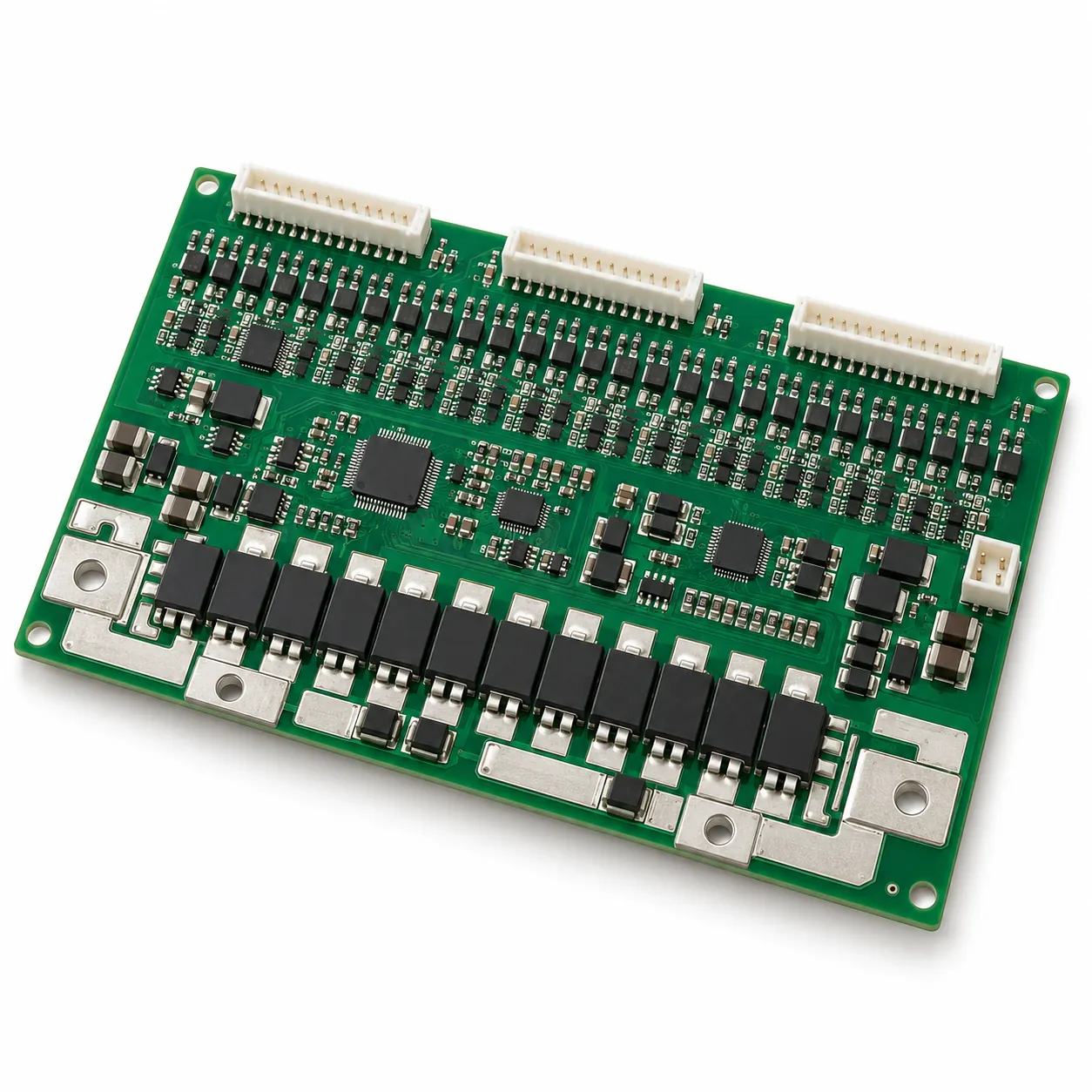 01 / PACK MATCHING
Chemistry & Configuration
Match the BMS to your battery chemistry, series configuration, operating voltage and pack architecture.
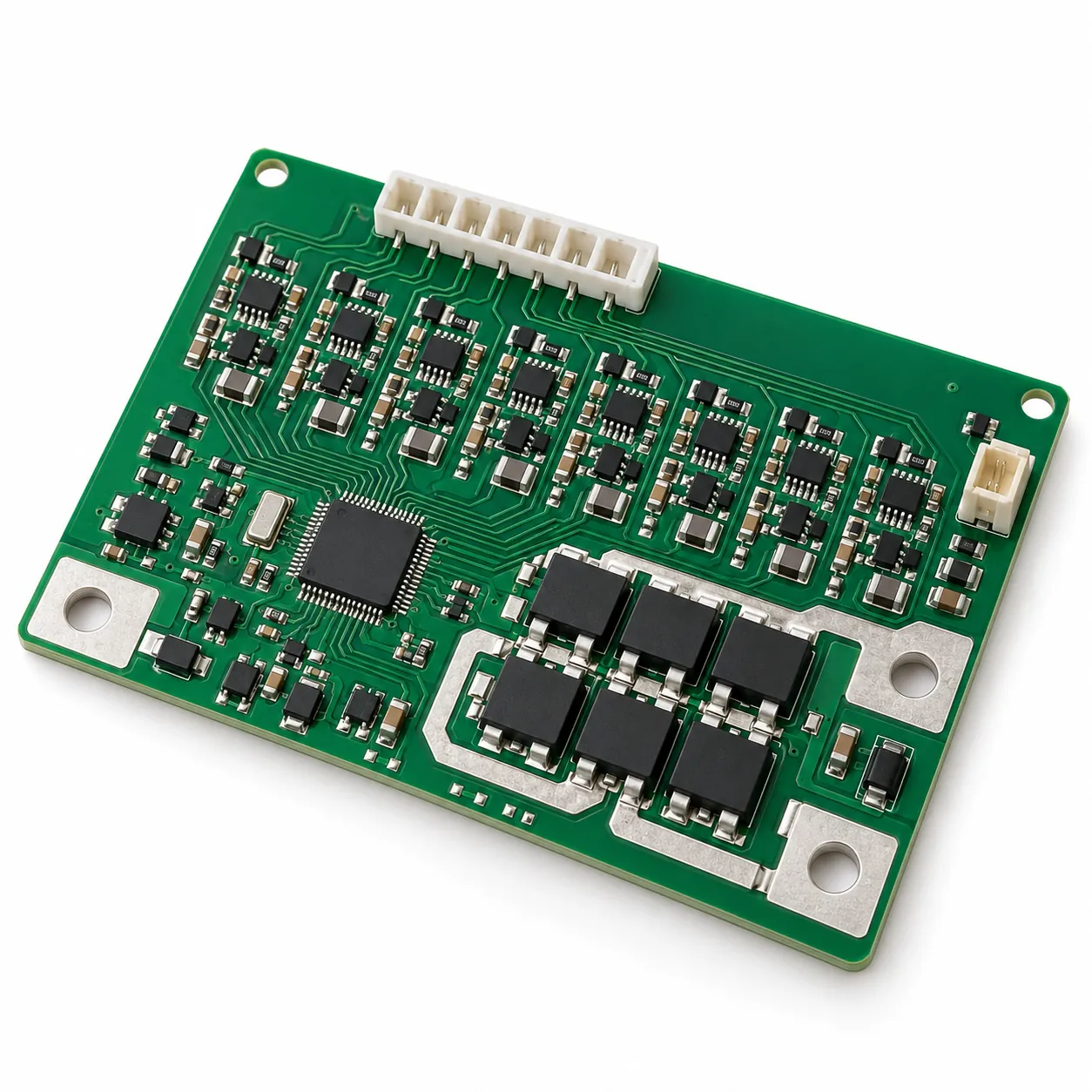 02 / POWER & SAFETY
Protection & Balancing
Define current ratings, protection parameters and passive or active balancing around the application.
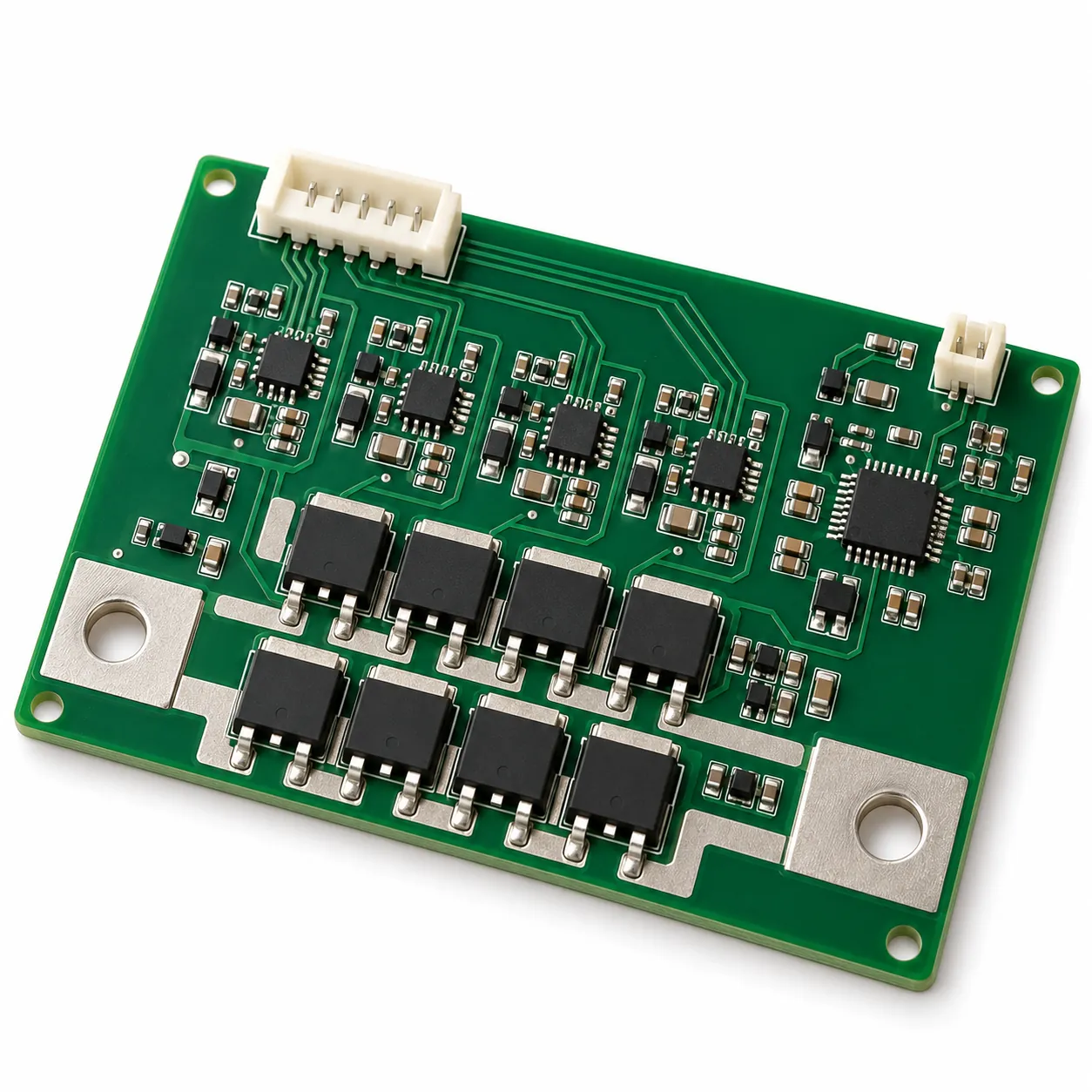 03 / SYSTEM DATA
Communication & Firmware
Evaluate CAN, RS485, UART, Bluetooth and smart monitoring functions where your system requires them.
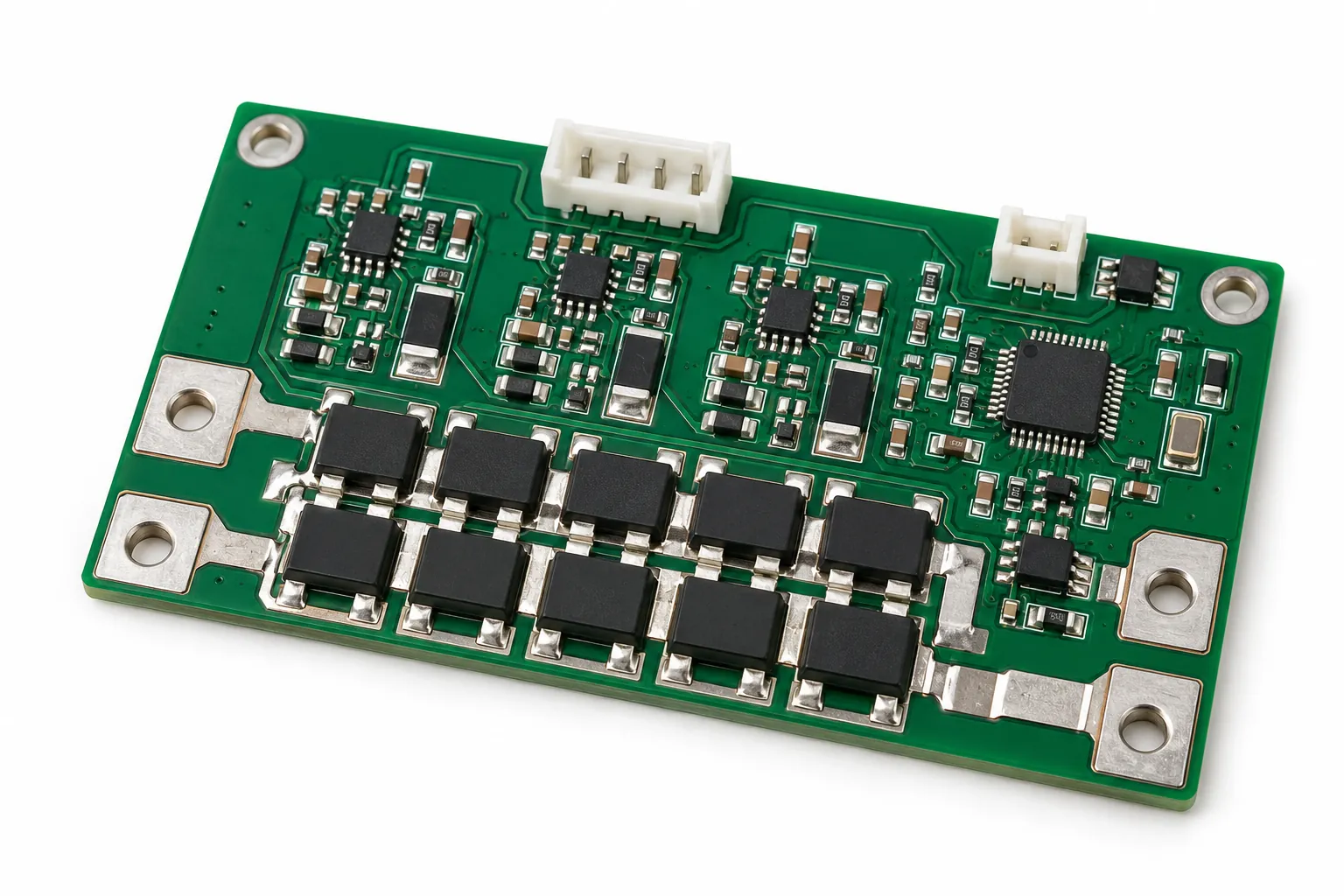 04 / FIT & ASSEMBLY
PCB & Mechanical Fit
Adapt board dimensions, connectors, wiring harness and integration details to the battery pack.
Benefits for Your Business
A correctly matched BMS can reduce integration work and help you address application-specific requirements.
Battery Pack Manufacturers
Simplify pack development and reduce electrical or mechanical integration problems while focusing on assembly and the end application.
Distributors & Wholesalers
Serve customers needing different BMS specifications. OEM labeling, custom options and project-based solutions can help differentiate your portfolio.
OEM Equipment Manufacturers
Develop battery management around your equipment instead of redesigning equipment around an off-the-shelf BMS.
Features — A BMS Built Around Your Battery Pack
We coordinate manufacturing-partner review of electrical, communication and installation requirements to assess a suitable existing or customized BMS configuration.
Electrical Configuration
- Li-ion, LiFePO4 and other supported lithium chemistries
- Cell configuration and operating voltage
- Continuous and peak discharge current
Protection & Balancing
- Overcharge and over-discharge protection
- Overcurrent, short-circuit and temperature protection
- Passive or active balancing options
Integration & Control
- PCB dimensions, connectors and wiring
- Firmware and protection parameter configuration
- Smart BMS functions where required
Final functions and ratings are defined through technical evaluation for the selected project.
Communication & Integration
Communication options can include CAN, RS485, UART and Bluetooth. We evaluate the battery pack, host system and required protocol before confirming compatibility and firmware settings.
- CAN
- RS485
- UART
- Bluetooth
- Smart monitoring
- Parameter configuration
From Requirements to Production
A successful custom BMS project involves more than PCB manufacturing. We coordinate requirements and manufacturer review, then agree sample validation responsibilities before volume purchasing.
- Review requirementsBattery chemistry, cell count, current, application, communications and installation limits.
- Define the solutionSelect an adaptable BMS platform or plan a dedicated OEM/ODM design.
- Validate samplesVerify protection, balancing, communication and pack integration with prototypes.
- Prepare productionConfirm the approved specifications, documentation and volume-production requirements.
For manufacturers, this supports easier electrical and mechanical integration. For distributors, it offers flexibility to serve customers requiring different BMS specifications.
Applications
OEM & ODM BMS solutions can be developed for a range of lithium battery applications.
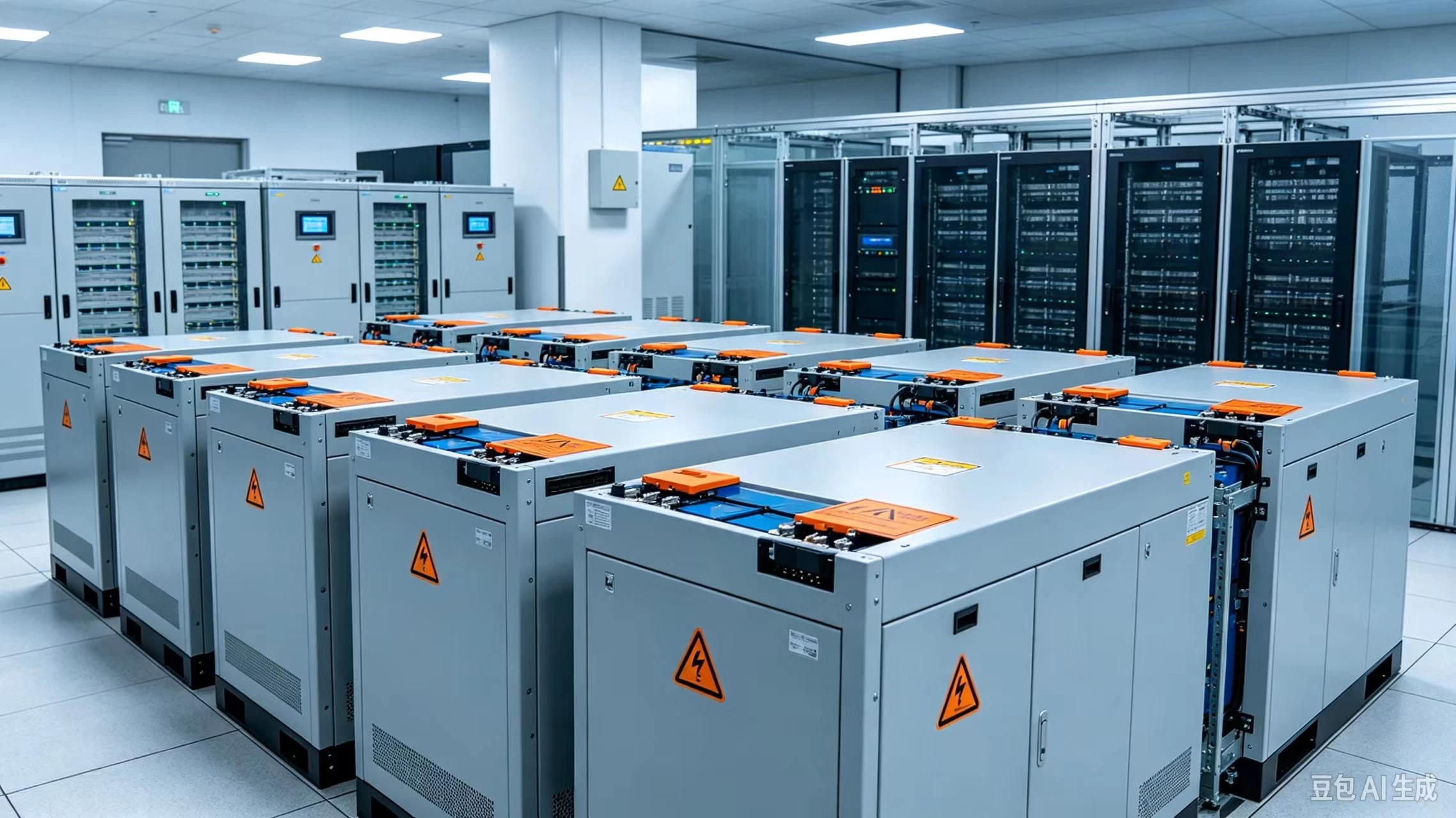
Energy & Backup
Energy storage systems, solar battery storage and backup power.
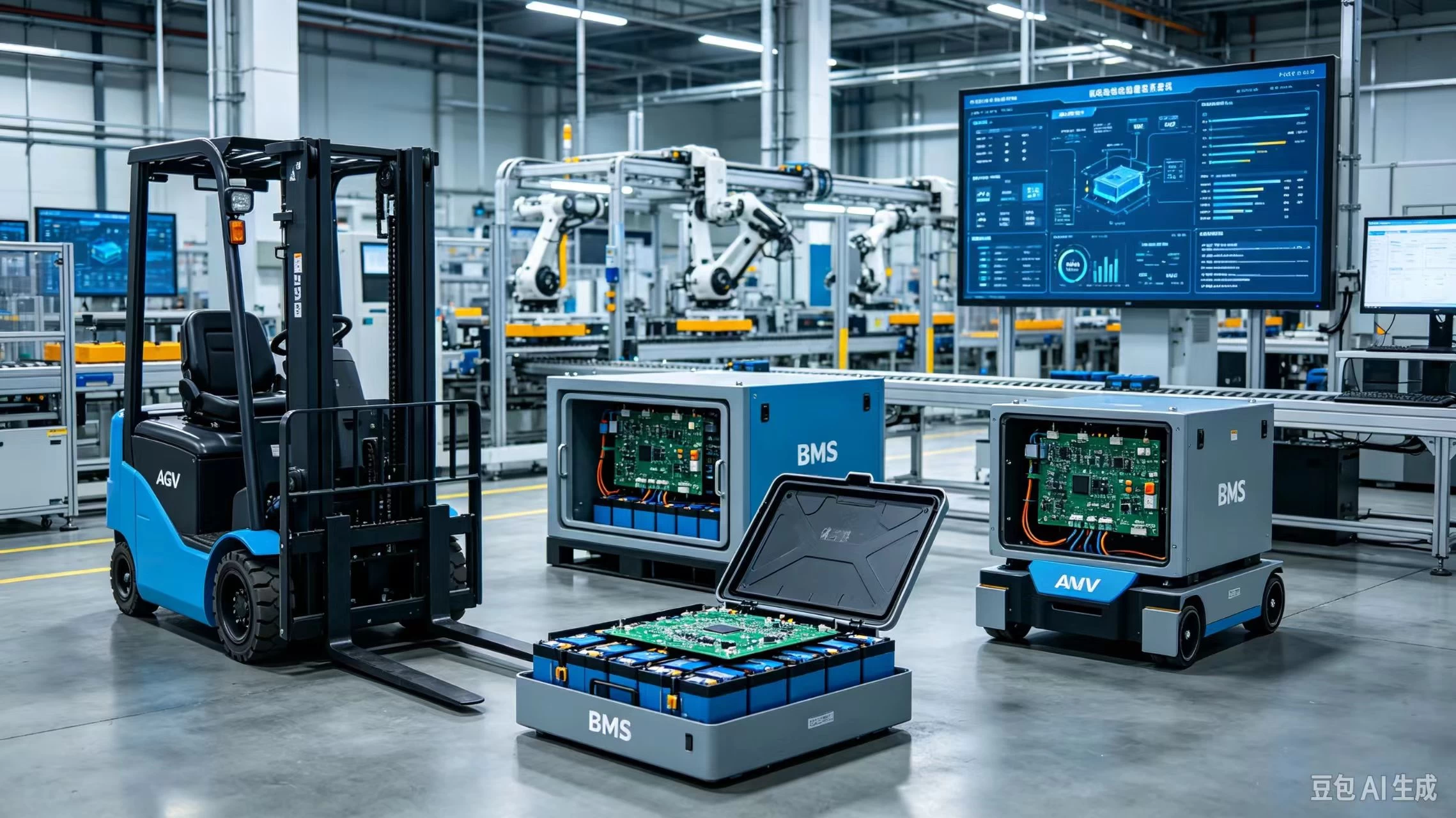
Industrial & Mobility
Industrial battery packs, AGV and robotics, and e-mobility.
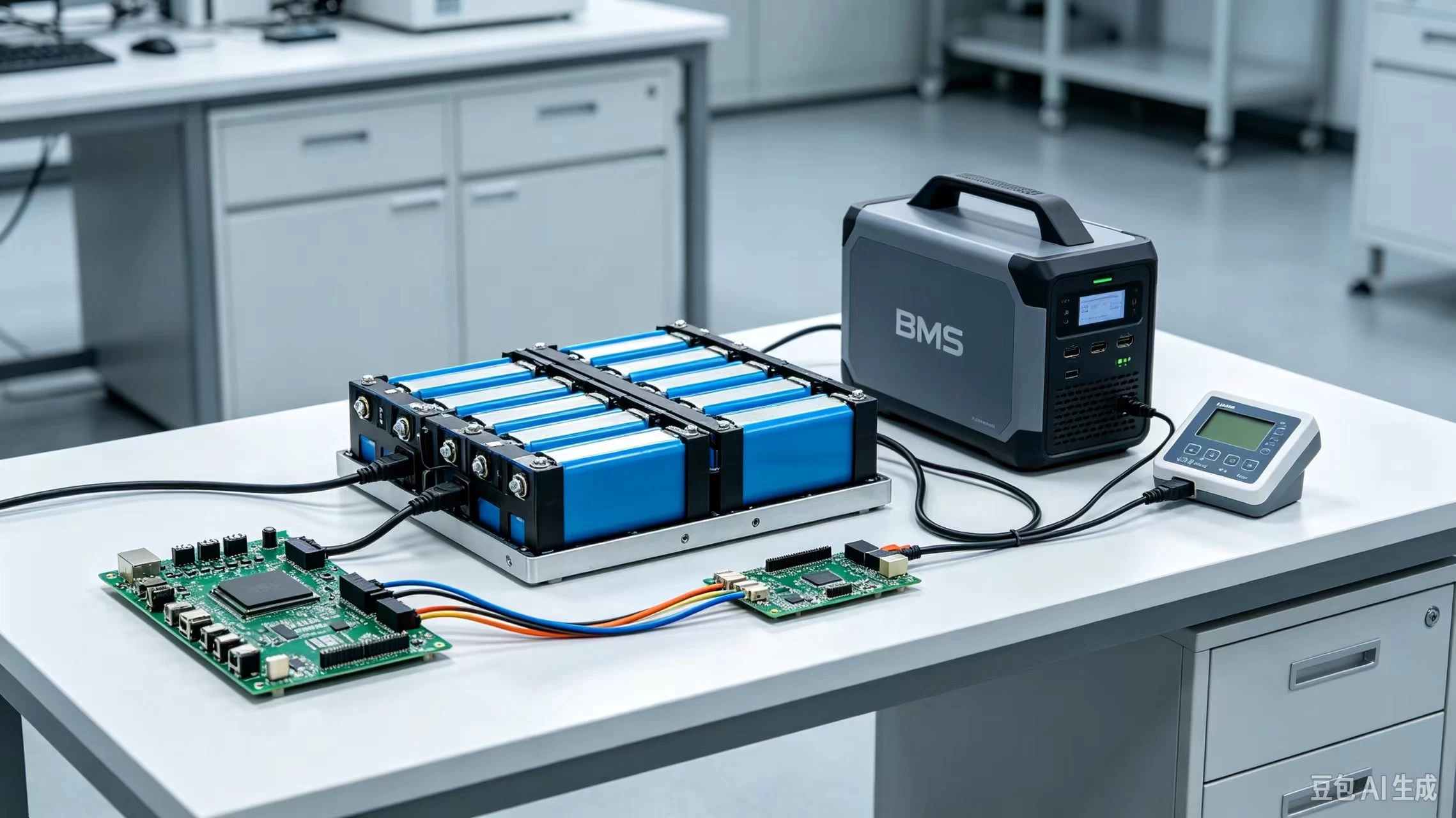
Pack & Portable Systems
LiFePO4 battery packs, consumer electronics and portable power systems.
OEM / ODM BMS Customization
We evaluate whether an existing BMS platform can be customized or a dedicated design is more appropriate. The choice depends on electrical requirements, communication, board size, connectors, wiring and the battery pack's operating environment.
Our OEM/ODM coordination covers requirement review, BMS selection, sample validation planning and manufacturing-partner supply discussions. The final scope is confirmed for each project.
Verification to Request for a Custom BMS
Custom development should be supported by measurable technical verification. Depending on the project, validation can include:
| Electrical & protection | Function & integration |
|---|---|
| Overcharge and over-discharge protection | Cell balancing function |
| Overcurrent and short-circuit protection | CAN / RS485 / UART communication |
| Charge and discharge performance | PCB inspection and functional testing |
| Temperature protection | Battery pack integration and sample validation |
Applicable specifications, test reports, certifications and quality documentation should be confirmed for the selected BMS model and project requirements.
How to Start Your Custom BMS Project
To recommend or develop the right BMS, please provide the following information:
- Battery chemistry
- Series configuration (S)
- Continuous and peak current (A)
- Charge/discharge voltage
- Communication requirements
- Balancing requirements
- PCB size or installation limits
- Application and estimated order quantity
With these details, our team can assess whether an existing BMS platform can be adapted or a dedicated OEM/ODM solution is more appropriate.
Frequently Asked Questions
Can you customize a BMS for our battery pack?
Yes. Specifications can be configured around battery chemistry, cell count, current, protection requirements, communication and physical dimensions, subject to technical evaluation.
Can you develop CAN or RS485 BMS solutions?
CAN, RS485 and UART requirements can be evaluated against the battery pack and host-system requirements.
Do you support prototypes before mass production?
For custom projects, prototype and sample validation can verify key functions before volume production.
What Are the Key Trends in New Energy Batteries Over the Next 5–10 Years?
Over the next 5–10 years, battery technology will focus on higher safety, longer lifespan, lower costs, and improved efficiency.
LFP batteries will remain competitive, while sodium-ion and solid-state technologies are expected to create new market opportunities.
For battery manufacturers, OEMs, system integrators, and energy storage providers, advanced Battery Management Systems (BMS), scalable solutions, and reliable supply chains will become key competitive advantages.
Businesses that prioritize safety, customization, system compatibility, and total cost of ownership will be better positioned in the growing global battery market.